

Introduction
Ghosts have been part of human storytelling for as long as we’ve had stories. Every culture on Earth has its own beliefs, legends, and methods for communicating with the dead.
But modern paranormal investigation didn’t appear overnight — it’s the result of centuries of folklore, religion, superstition, and eventually, science.
In this lesson, we’ll explore the path from ancient beliefs to the modern ghost hunting techniques you’ll be learning in this course.
Ghosts in Ancient Cultures
Long before night-vision cameras and EMF meters, humanity explained strange events through spirits.
-
Ancient Egypt – Tomb curses and the ka (life force) lingering after death.
-
Ancient Rome & Greece – Ghosts as omens, often tied to unfinished business.
-
China & Japan – Ancestor spirits, festival rituals, and ghostly punishments.
-
Indigenous Traditions – Deeply spiritual connections to the land and ancestors.
These beliefs shaped early rituals for honoring or banishing the dead.
The Middle Ages & Early Modern Period
In Europe, the medieval church both reinforced and challenged ghost stories. Spirits were sometimes seen as souls from purgatory, other times as demons in disguise. Ghost sightings were documented in religious texts, often tied to morality lessons.
By the 1600s and 1700s:
-
Skepticism began to grow alongside the scientific revolution.
-
Early ghost “investigations” were often church-led inquiries into hauntings.
-
The idea of documenting events and seeking proof began to emerge.
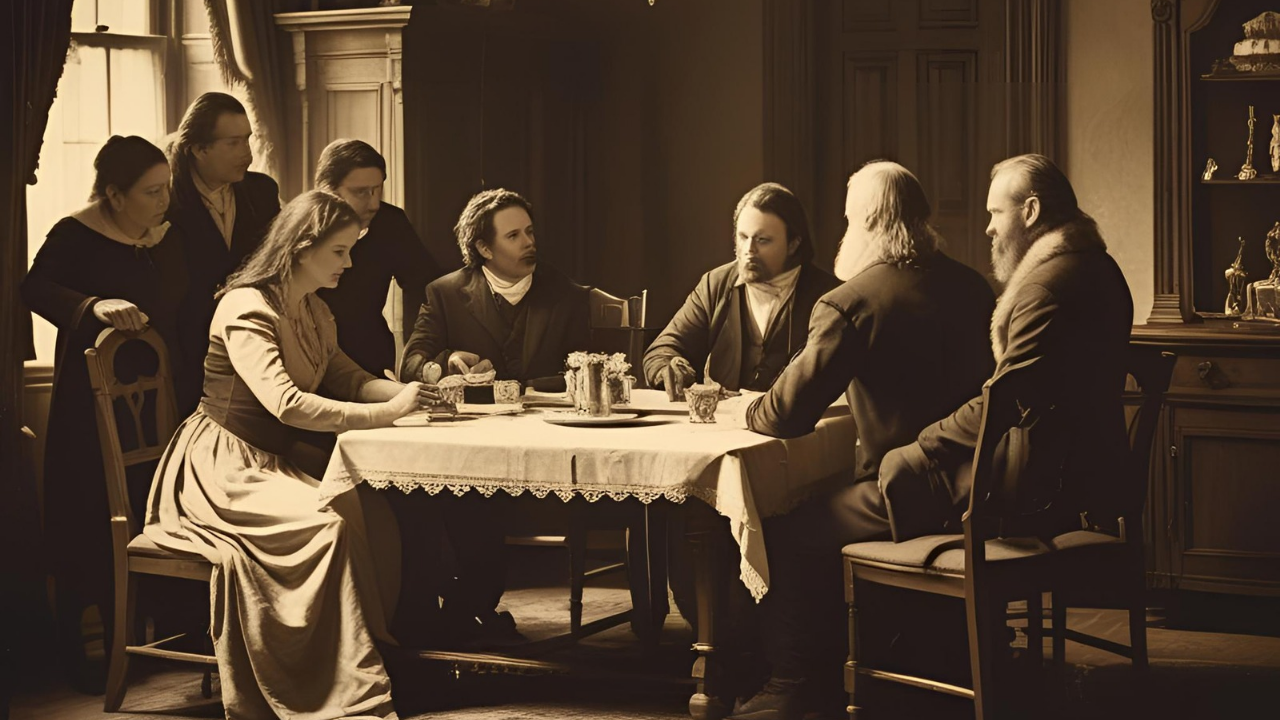
The Spiritualist Movement (Mid–1800s)
The birth of modern ghost hunting is often linked to the Spiritualist movement, which began in the U.S. and spread worldwide.
-
Famous Cases: The Fox Sisters in New York (1848) claimed to communicate with spirits through knocking sounds.
-
Séances, table tipping, and automatic writing became popular.
-
Photography entered the scene — with both genuine experiments and fakes, such as “spirit photography.”
This was the first time average people felt they could actively try to contact the dead.
Early Scientific Approaches (Late 1800s–Early 1900s)
Not everyone was convinced by séance theatrics. Organizations like the Society for Psychical Research (SPR) in London began investigating paranormal claims with a scientific mindset.
-
They studied hauntings, telepathy, and mediumship.
-
Researchers sought ways to measure and record unusual phenomena.
-
Tools like thermometers, cameras, and early electrical devices were introduced.
The Rise of Modern Ghost Hunting (Late 20th Century)
By the 1970s–90s:
-
Teams like Ed & Lorraine Warren became household names through famous cases like Amityville.
-
Technology advanced — tape recorders for EVP, video cameras for documenting movement.
-
Paranormal research groups began forming across the globe.

The Paranormal in the 21st Century
The 2000s brought a major shift:
-
TV shows like Ghost Hunters and Ghost Adventures popularized the field.
-
Affordable digital recorders, EMF meters, and night-vision cameras made investigations accessible to anyone.
-
The internet allowed investigators to share findings instantly.
Today’s ghost hunting blends ancient curiosity, spiritual traditions, and modern science — and you’re about to learn how to do it the right way.
Action Step Before Moving On
-
Think about the first time you heard a ghost story. Was it based in history, religion, or pop culture?
-
Look up one local legend or haunting in your area and jot down how long it has been told.
Closing
You now have a foundation for understanding how paranormal investigation evolved — and why some methods still carry traces of the past. In our next lesson, we’ll explore the different types of paranormal phenomena so you can start identifying what you’re dealing with in the field.